
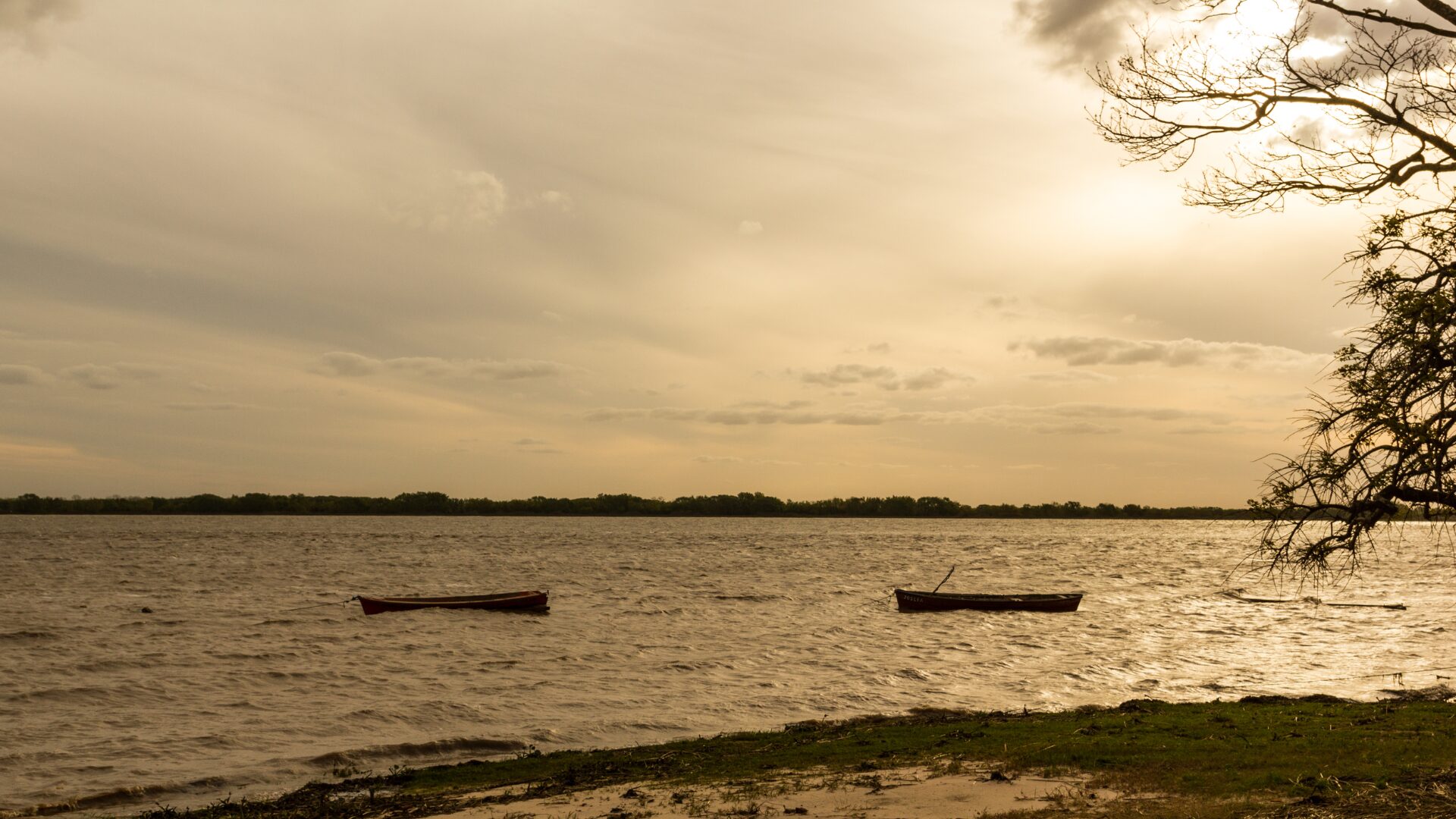
The Uruguay River seems like a silent giant, but beneath its surface it holds stories we have not yet learned to hear. Among them are those of the freshwater stingrays of the genus Potamotrygon (P. brachyura, P. motoro, P. schuhmacheri) – cautious, ancient, vulnerable species that have accompanied riverside life for centuries, and about which much remains to be discovered regarding their biology and ecology.
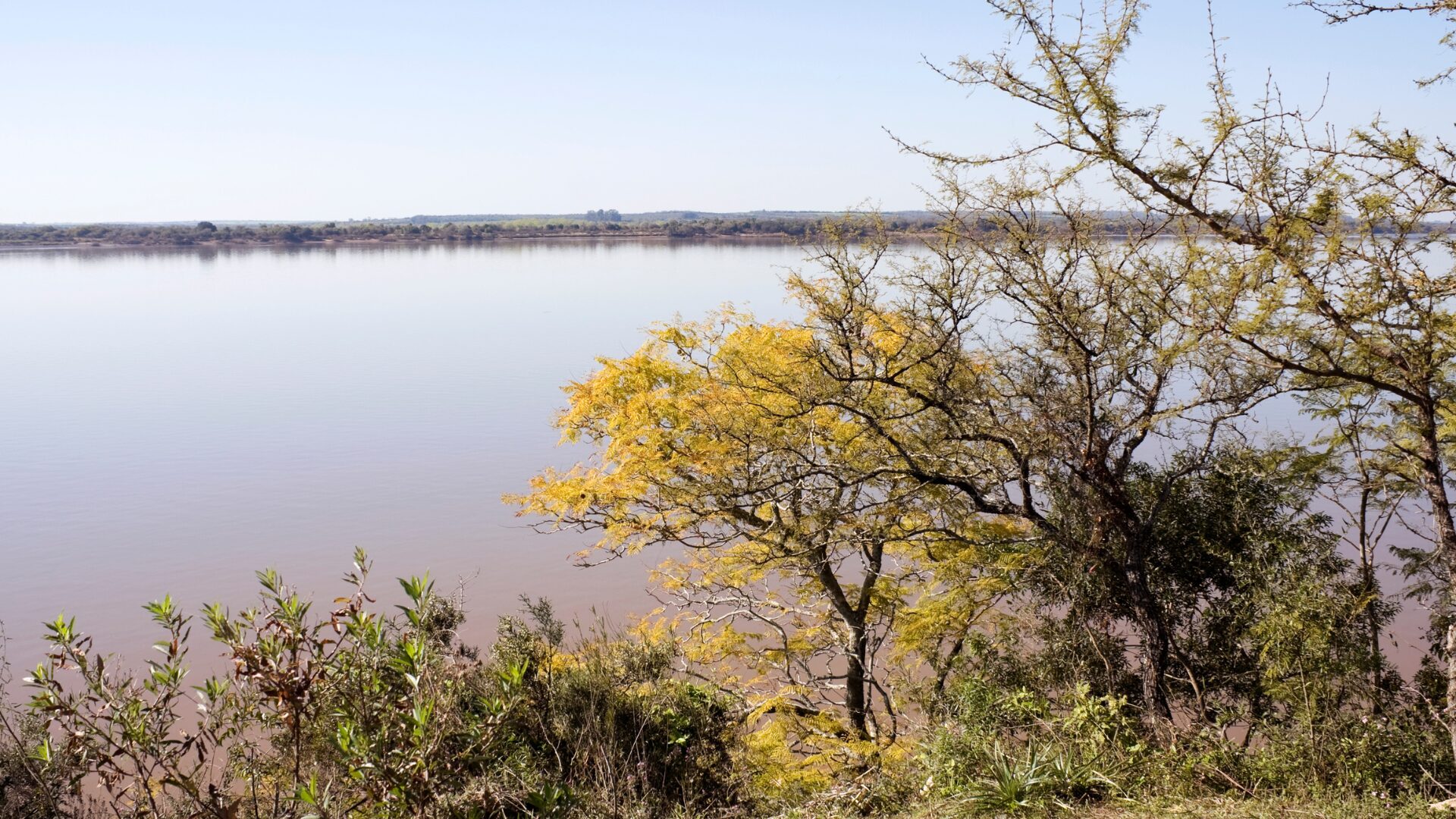
Today, freshwater stingrays face a critical situation marked by habitat loss, bycatch, and pollution. Between the cities of Fray Bentos and Paysandú, the middle section of the Uruguay River, they gather seasonally, making them even more exposed to human threats.
These two riverbank cities became the setting for an unusual gathering: scientists, artists, students, and communities came together to think – and feel – about the Uruguay River. “Rays, River and Resonance” proposed something urgent: to look at the river again, attentively, with knowledge, but also with sensitivity, and recover relationship with a group of fish that forms an essential part of the river’s identity.
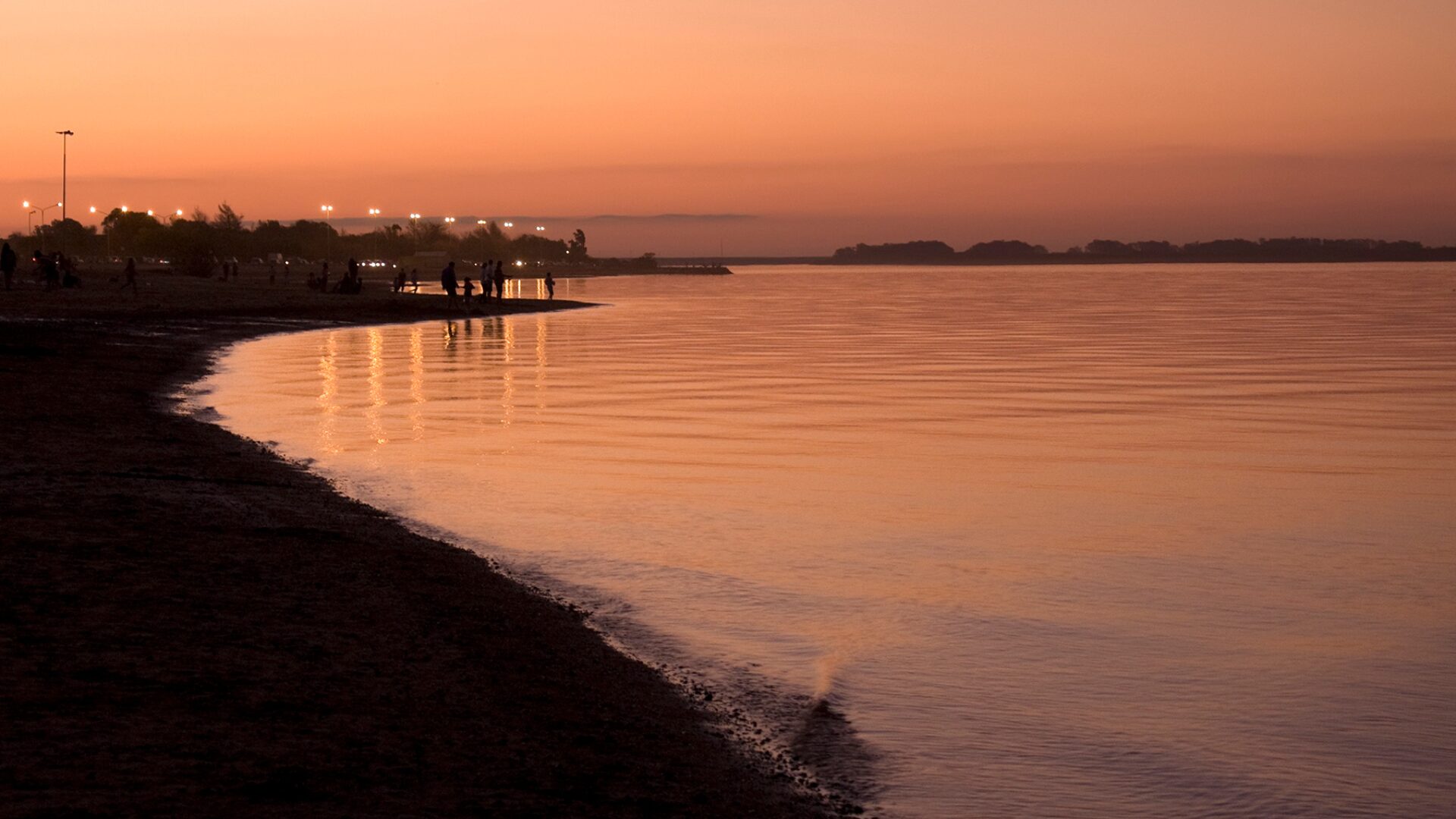
The Bridge of Art: Listening to the River in Another Way
Scientists Dr. Luis Lucifora (INALI–CONICET, Argentina) and Iván González Bergonzoni (CENUR Litoral Norte – UdelaR) brought to the public data that rarely makes headlines: the fragmented knowledge about these species, the absence of a comprehensive conservation strategy, the need for continuous studies, and regional policies.
Lucifora reminded us that chondrichthyans – sharks and rays – are among the most threatened groups of vertebrates in the world, while Bergonzoni contributed a local view:
“Understanding behaviour and habitat use is key for Uruguay to design real conservation measures.”
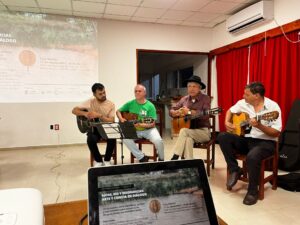 Between scientific presentations, music opened a moment of pause. The Aníbal Sampayo Cultural Group guided the audience toward another way of understanding the river: through feeling, cultural memory, and songs that narrate what data alone cannot capture. Their performances were like small ceremonies. Music and lyrics were a reminder that conservation is impossible without identity, without river pride, without understanding that riverside culture is also part of biodiversity.
Illustrating to Conserve: The Power of Seeing What We Do Not Always Notice
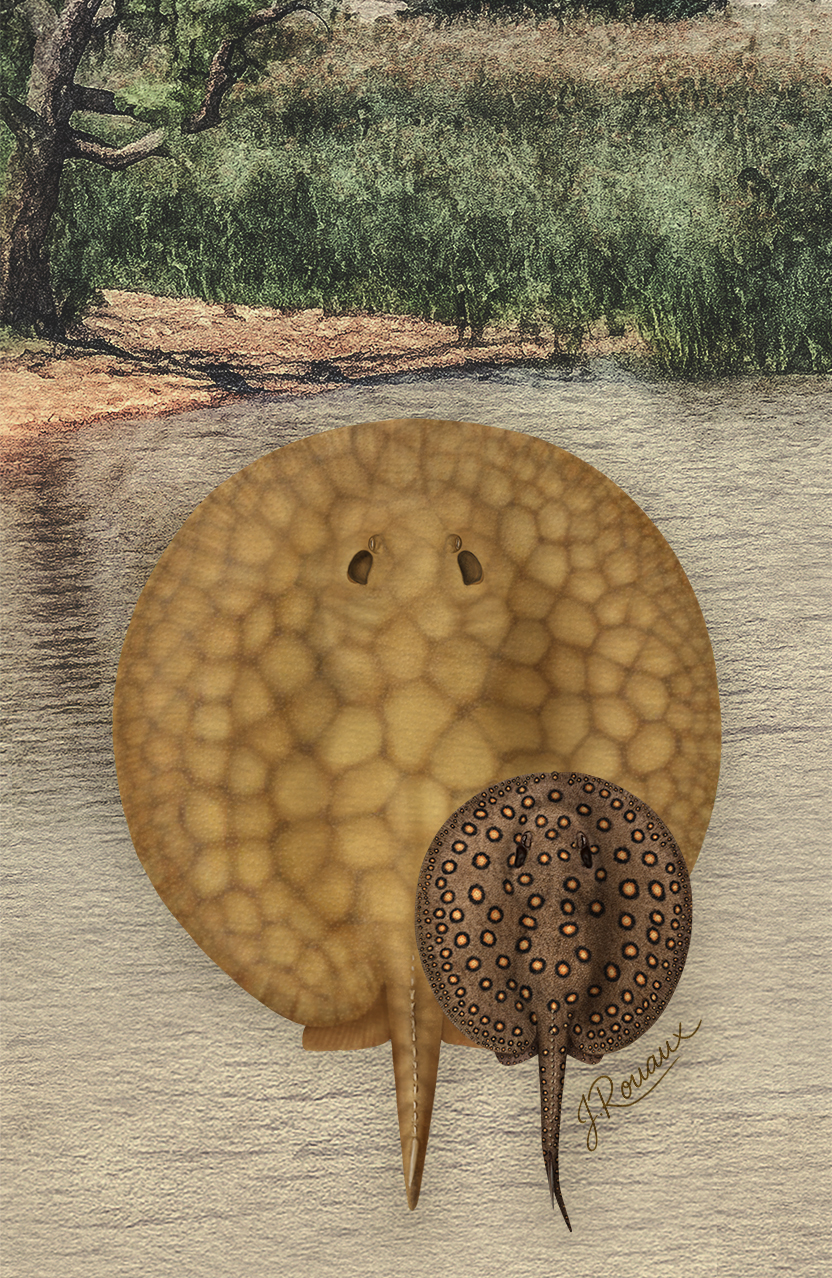
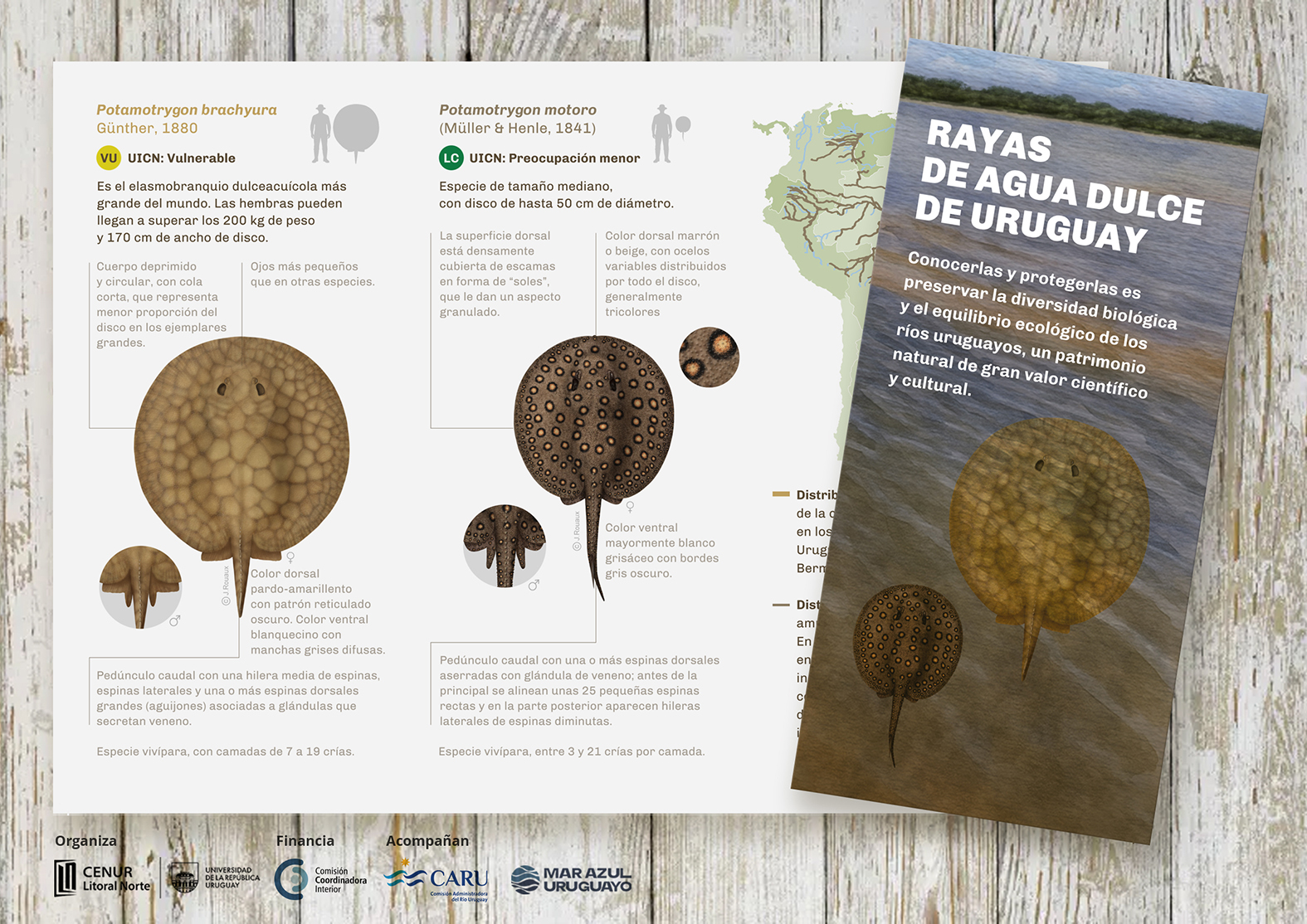
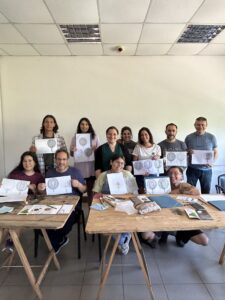 Another key component for “Rays, River and Resonance” was a Scientific Illustration workshop led by Dr. Julia Rouaux, who has spent more than 15 years illustrating – rigorously and beautifully – threatened species. Students of biology, teachers, artists, and communicators participated, immersing themselves for two days in light, shadow, textures, anatomy, and deep observation.
“Scientific illustration, is a tool of knowledge that is both powerful and humble. It forces us to observe honestly. Looking is an act of care.”
In a country where almost no visual resources exist about river stingrays, the scientific illustration workshop was not just technical training: it was an act of education and ecoliteracy.
-

- Illustrations by Julia Rouaux
A River Asking to Be Heard
What these encounters left behind cannot be measured in a schedule: it was a climate. A shared atmosphere among those who attended out of curiosity, commitment, or love for the river. There was talk of science, yes, but also of belonging. There was talk of conservation, but also of identity.
The stingrays of the Uruguay River are neither an isolated issue nor a biological oddity, but part of a cultural, ecological, and community fabric that now needs care.
The events reminded us that conserving is not only studying: it is narrating, listening, creating images, singing, weaving alliances. It is saying aloud that we are still on time. We can still choose a living river.
“River’s song is the song of songs, sung in spirals and stars and roars and other notes beyond hearing…”
― Is a River Alive?
In a time when freshwater biodiversity faces a severe and accelerating crisis, “Rays, River and Resonance” marked a political and cultural gesture: recognising the river as a living subject, a space of memory, and a system urgently in need of attention.
Text and images courtesy of Victoria Lagaxio and Julia Rouaux.
The initiative was led by Liber Acosta and Juan Pablo Apollonia of the Northern Coast Regional University Center (CENUR Litoral Norte) of the University of the Republic, in collaboration with our local partner Mar Azul Uruguayo, an organization dedicated to marine conservation and ocean literacy.
It was made possible thanks to financial support from the Academic Activity funds of the Interior Coordinating Commission (CCI), a clear demonstration of institutional backing for projects that integrate research, education, art, and territory; and support from the Administrative Commission of the Uruguay River (CARU), reinforcing the binational and community character of the event, bringing together voices and perspectives from both sides of the river.
Special thanks to Victoria Lagaxio of the Division for Communication and Dissemination for Paysandú Campus of CENUR Litoral Norte – UdelaR (and Mar Azul team member), who sustained and accompanied the process from the beginning: shaping messages, organizing events, and engaging local communities and fishers. And to Julia Rouaux for her beautiful illustrations and teaching us how to observe and foster a deeper sense of care and responsibility for the river and rays.