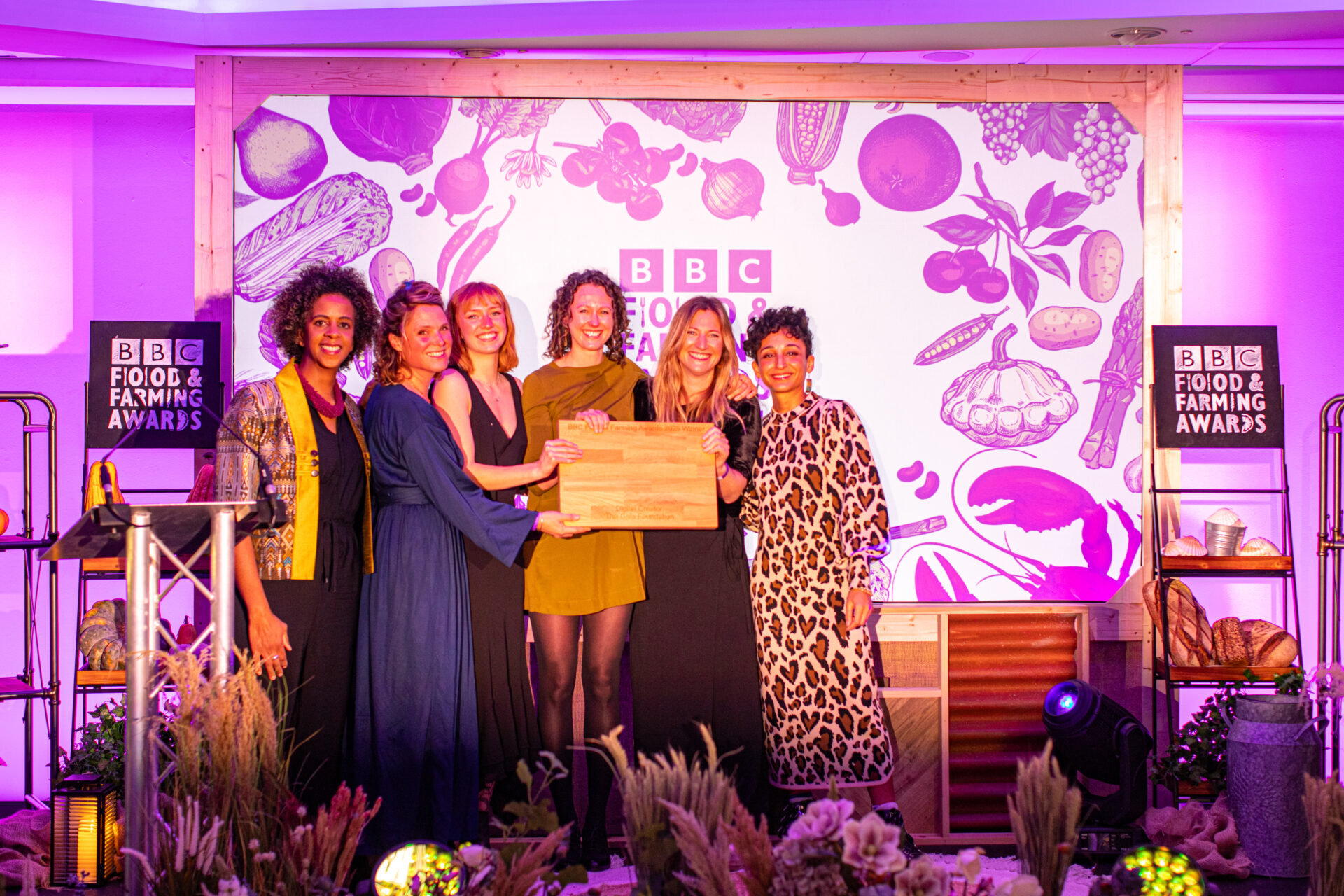
We are thrilled to have received the Digital Creator Award at the BBC Food & Farming Awards, in recognition of Gaia’s approach to restoring our living world through a virtual one. We were nominated alongside food policy activist Gavin Wren and film creators Six Inches of Soil, with the category judged by presenter Leyla Kazim and chef Melissa Thompson. Listen back to the Awards Ceremony in full on BBC Radio 4’s Food Programme here.
“I love the creative and sympathetic way they use digital mediums to allow the arts such as poetry, photo essays, film and animation, to act as modes of delicate activism. They recognise the ancient art of storytelling as one of the most impactful yet underused methods of affecting cultural change.”
We were deeply grateful to hear this affirmation, from judge Leyla Kazim, that Gaia’s presence in the digital space is bringing us back to ourselves as human kind, not machines. We consider, daily, how to contribute to an online culture that nurtures life-to-life connection out there in the wild, where stars shine brighter than screens. Each of Gaia’s offerings – whether an Instagram post, a film, or a blog such as this – is an attempt at reviving the storied relationship between lands and lives that once gave us so much meaning.
Stories are how humans have evolved to understand the world, our place in it and our responsibility to it. They are how elders passed on knowledge within indigenous communities for millenia. In telling stories online, Gaia is circling back to our capacity for collective understanding, abundant empathy and shared devotion.
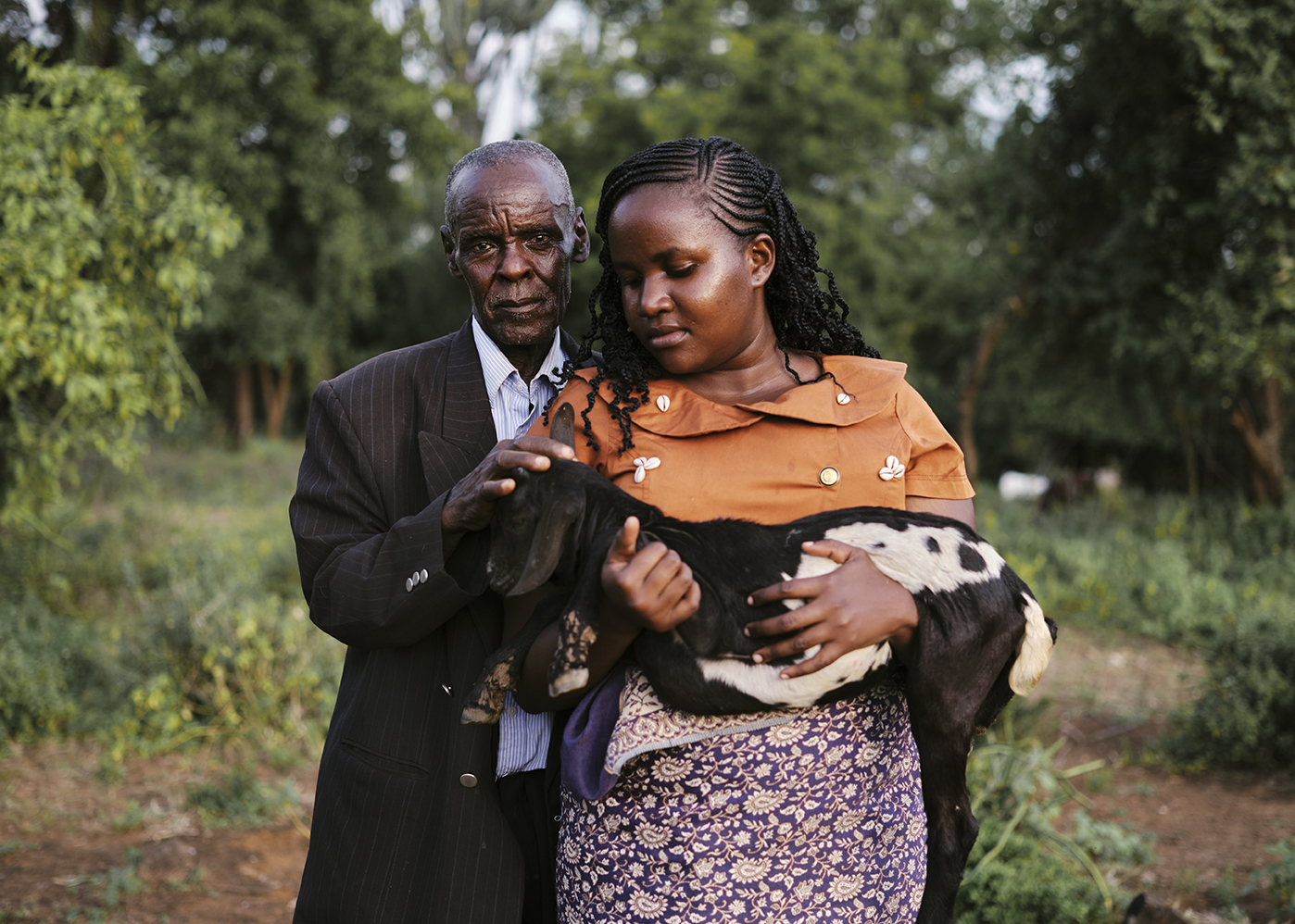
Mutegi M’Mwaria and Brennie Muthoni in Kenya, by Andy Pilsbury
We often tell these stories through art forms like poetry and image-making: ancient vessels that have been stripped of power in modern times. Along with other ways of perceiving and expressing our part in this living planet, like song and dance, they have been trivialised by the dominance of left-brain logical thinking encouraged by industry and capitalism, as well as religious doctrine. Collaborating with artists has become, for Gaia, a delicate activism.
In the words of philosopher David Abram, this “is the practice of spinning stories that have the rhythm and lilt of the local sound-scape.” For example, it is why we commissioned Testament – the record-breaking, beatboxing poet from Yorkshire – to visit Strickley Farm and learn hedge laying, known locally as ligging. In venturing from city to farm fields for the first time as part of our We Feed The UK project, Testament found that “To lig is poetry. Cutting and bending lines so new life will come, inking with saplings across landscapes, collecting carbon. Writing with hawthorn, blackthorn and willow with cursive hand.” As Abram goes on, “Only when we slip beneath the exclusively human logic continually imposed upon the earth do we catch sight of this other, older logic at work in the world. Only as we come close to our senses… do we begin to notice and respond to the subtle logos of the land.” You can hear Testament performing here, on an episode of BBC Radio 4’s Food Programme dedicated to We Feed The UK.
Each of these artful stories is an invitation to tune in. Digital forums like social media risk turning us away from our Earth community, using attention-seeking tactics to trap us within mirrored walls that reflect us back to ourselves. While meeting online is an incredible starting point, Gaia exists to encourage a direct, sensory relationship with the lands and waters around us. It is there we can take action that is in real response to the immediate needs of our living world, where we can perceive the sea’s sigh or bird’s cry, and act on it. In this way, we hope our gifts of global inspiration lead to grassroots change.
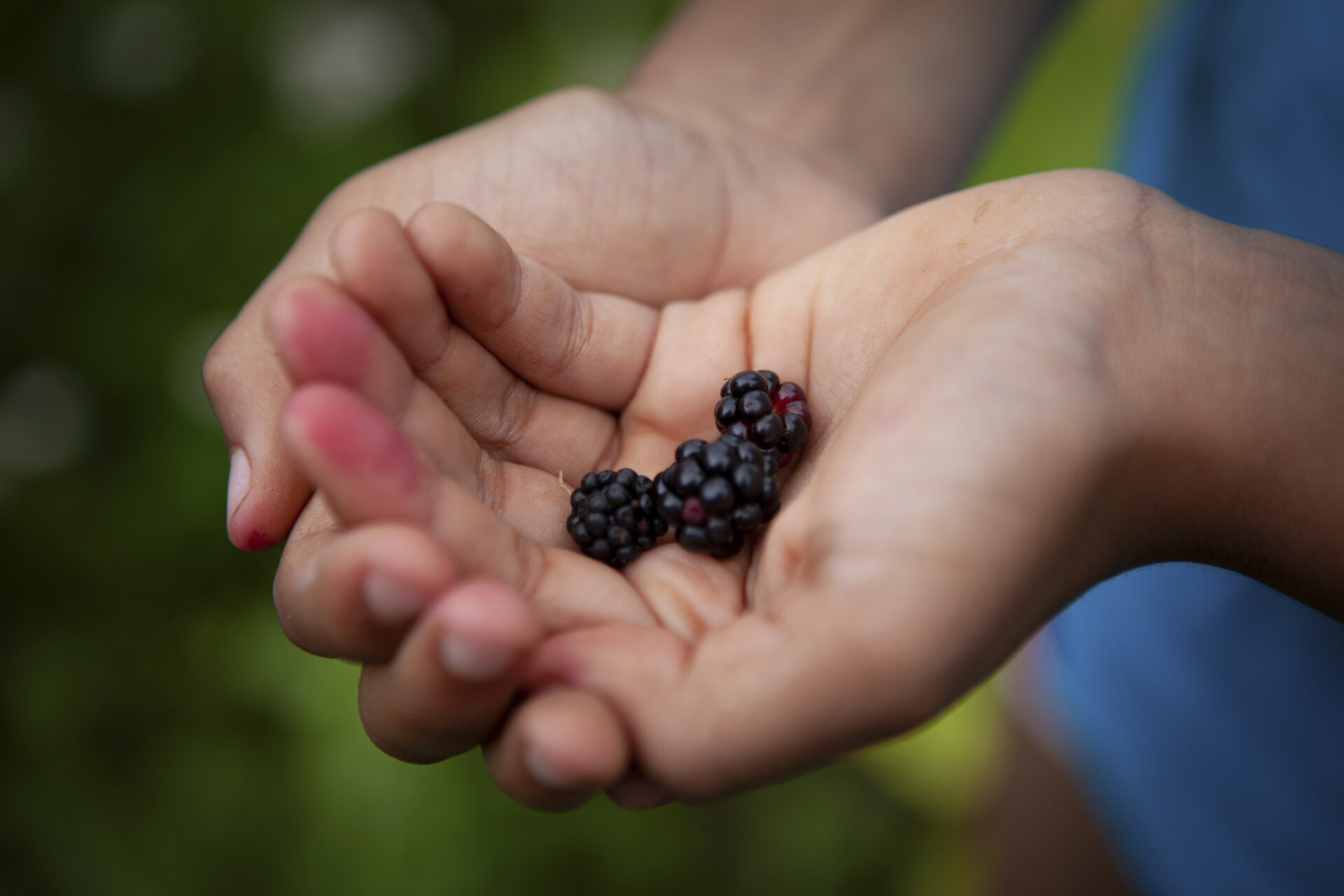
Evelyn with wild berries at Falcon Fields in London, by Arpita Shah
There’s a resistance in all this to the domineering extractivism that has caused a polycrisis and often flaunts its egotistical, competitive, ever-growing tailfeathers through technology. Our animation, Wake Up Call, is a funny and fast-paced look at how the tech dream has become a nightmare. Yet Gaia has found, around the world, that food systems are central to the critical transformation we need, from a human-centred to an earth-centred perspective.
Food is such a tangible example of the way we are formed of the earth, and is something we share in with every other living being, human and more-than-human. The food web is a web of reciprocity in which we’re all spun, and from its core come radial threads that impact so much of society. The food system impacts our physical health but also our mental and spiritual health, equality and justice, climate change, the economy, community, and above all, our connection to this greater community of life that extends beyond the human. Recalling this prompts questions like: What if the places where we produce food could nourish all? What if farmers and fishers could be custodians of that balance, diversity and justice? And what if this collective effort gave us resilience to planetary changes, because we’re rooted in the understanding that we live in constant co-creation? What a delicious remembering and future vision.
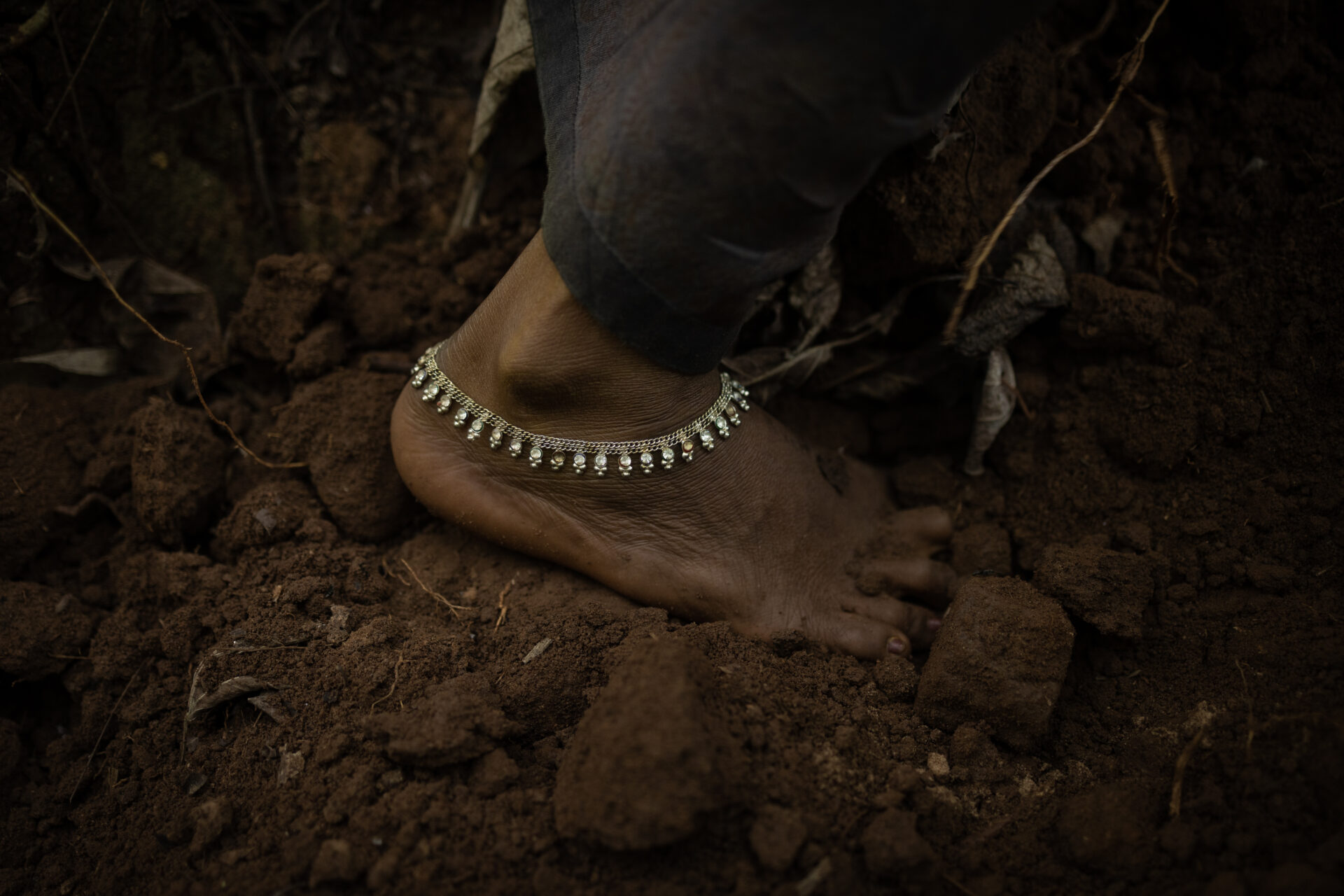
Basudha Farm in Odisha, India, by Jason Taylor
As the founding father of Earth Jurisprudence, Thomas Berry, would say, what we face is a crisis of the imagination: “The deepest crises experienced by any society are those moments of change when the story becomes inadequate for meeting the survival demands of the present situation.” This Award is for all the soil sisters and seed whisperers, worm charmers and welly-booted farmers who have a new story to tell. It is your tales that deserve this recognition, and Gaia is only too lucky to tell them.